

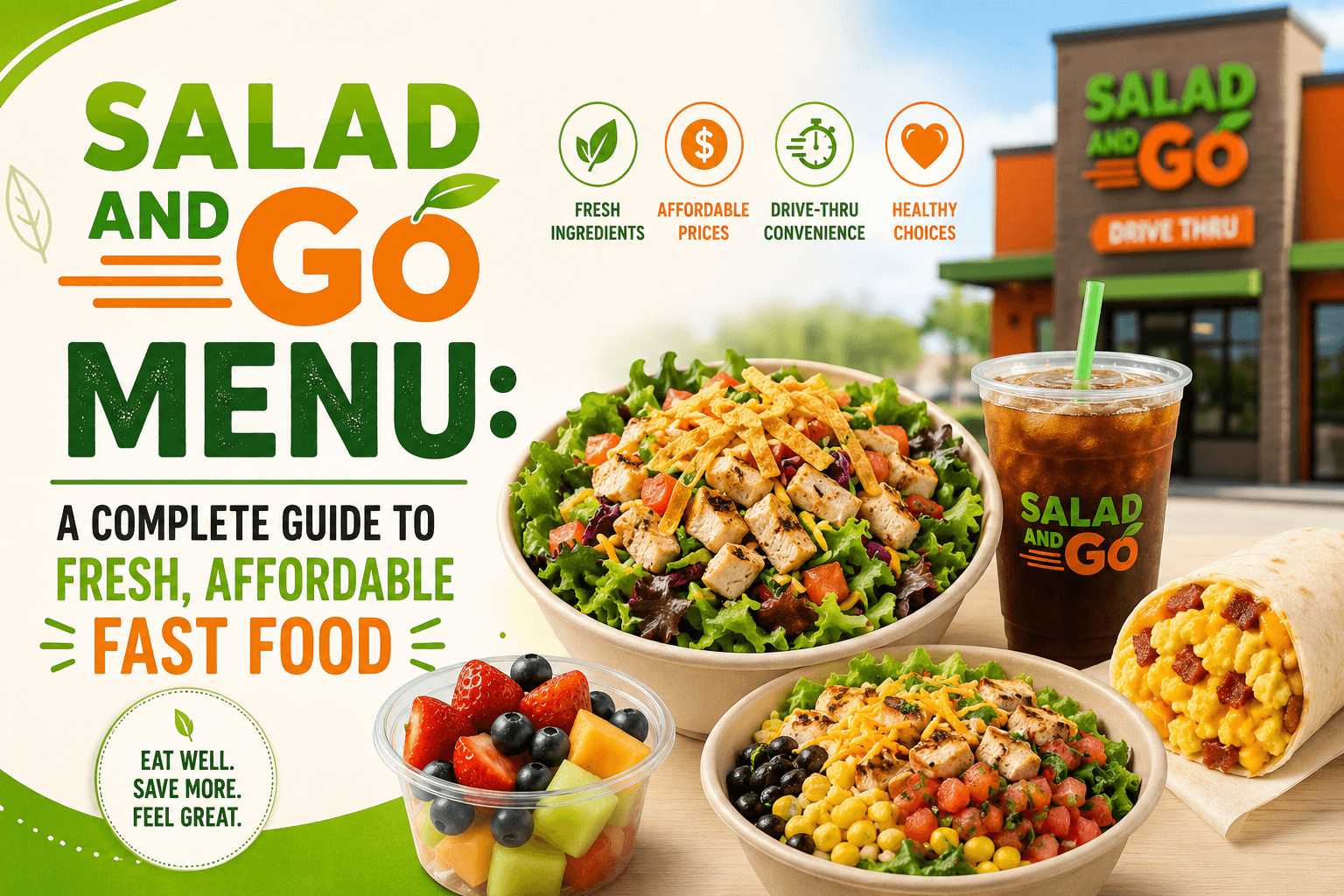
Fast food and fresh food don’t usually belong in the same sentence, but Salad and Go has built its entire business around proving that wrong. The salad and go menu takes the speed and convenience people expect from a drive-thru and pairs it with ingredients that actually feel healthy, all without the high price tag that usually comes with fast-casual salads.
This guide breaks down everything worth knowing about the salad and go menu, from how the brand got started to what’s currently available, how pricing compares to competitors, and a few tips that make ordering easier the next time you pull up to the window.
How Salad and Go Got Its Start
Salad and Go began with a fairly simple idea: make fresh, healthy food accessible without forcing customers to pay premium prices or wait in long lines. Instead of building large sit-down restaurants, the company leaned into a small drive-thru format, which kept operating costs lower and allowed savings to be passed directly to customers.
That approach paid off. The salad and go menu became known for offering salads, wraps, and bowls at prices that undercut nearly every other fast-casual salad chain in the country. Rather than treating healthy eating as a luxury, the brand positioned itself as an everyday option, something people could grab on a regular Tuesday morning rather than saving for a special occasion.
Over time, the company expanded beyond its original footprint, growing across states like Arizona, Texas, Oklahoma, and Nevada. That growth reflects a broader shift in fast food, where customers increasingly want convenience without sacrificing nutrition, and the salad and go menu sits right at the center of that shift.
What’s Actually on the Menu
The salad and go menu is organized around a few clear categories: salads, wraps, grain bowls, breakfast items, and drinks. Each section is built to keep things simple, which is part of why the ordering process feels so quick compared to chains with sprawling menus.
Salads remain the heart of the brand, and for good reason. The Cobb Salad and Caesar Salad are consistently among the most popular choices, offering a familiar, satisfying base that customers can rely on. Beyond the classics, the menu includes bolder options like the Thai Salad, Greek Salad, Buffalo Chicken, and Jalapeño Ranch, giving customers more flavor variety than a typical drive-thru salad chain usually offers.
Wraps function as a slightly more portable alternative to the salads, using similar ingredients folded into a tortilla instead of served over greens. This makes them a popular choice for anyone eating in the car or at a desk, where a fork and bowl aren’t practical.
Grain bowls have become an increasingly important part of the salad and go menu as well, appealing to customers who want something a bit heartier than a traditional salad. These bowls typically combine grains, protein, and vegetables in a single container, making them a solid option for lunch or dinner when a lighter salad might not be filling enough.
Breakfast Options Worth Knowing About
While salads get most of the attention, breakfast has quietly become one of the strongest parts of the salad and go menu. Breakfast burritos are a particular standout, offering a warm, protein-packed option that competes directly with traditional fast food breakfast sandwiches, just with a fresher ingredient list.
Breakfast bowls and quesadillas round out the morning lineup, giving customers a lighter option when a full burrito feels like too much. These items tend to range from a few hundred calories up to around eight hundred, depending on portion size and ingredients, which gives customers flexibility depending on how hungry they actually are that morning.
Drinks play a meaningful role here too. Cold brew coffee has become one of the more popular beverage choices on the salad and go menu, along with fresh juices and lemonades that fit the brand’s overall focus on lighter, cleaner ingredients. Most drink options stay under 150 calories, which keeps them in line with the rest of the menu’s health-conscious positioning.
Customization and Protein Choices
One of the more practical strengths of the salad and go menu is how easy it is to customize. Nearly every salad and wrap allows customers to choose their protein, whether that’s roasted chicken, slow-roasted pulled chicken, or plant-based options like tofu for anyone avoiding meat.
This flexibility matters more than it might seem at first glance. A lot of fast-casual salad chains treat customization as an upsell opportunity, tacking on extra charges for substitutions or protein swaps. Salad and Go has generally kept this process simple and affordable, which reinforces the brand’s overall value-focused identity.
Vegetarian customers are well accommodated too, with several salads built specifically around vegetables and plant-based proteins rather than requiring extensive modification of a meat-based dish. That inclusivity has helped the salad and go menu appeal to a wider range of dietary preferences than many competitors manage.
Seasonal and Limited-Time Items
Part of what keeps customers coming back is that the salad and go menu doesn’t stay static throughout the year. The brand regularly introduces limited-time items tied to seasonal produce or broader nutrition trends, which keeps the lineup feeling fresh rather than repetitive.
A recent example of this came with the Good Greens Salad and Wrap, a returning item built around avocado, marinated chickpeas, Brussels sprouts, cucumber, and croutons served over a spinach and romaine base, finished with a Lemon Basil Vinaigrette. Items like this tend to launch alongside broader wellness pushes, particularly around the new year, when many customers are actively looking to eat healthier without giving up convenience.
This rotation of seasonal items reflects a smart strategy. Rather than overhauling the entire salad and go menu constantly, the brand introduces new options gradually, giving loyal customers something new to try while keeping the core lineup stable and familiar.
Pricing and Value Compared to Competitors
Price is arguably the single biggest reason the salad and go menu has grown so quickly. Most salads and wraps are priced well under what similar fast-casual chains charge, with many items landing under six or seven dollars. Breakfast burritos often start around three dollars, while larger salads and grain bowls typically fall between seven and nine dollars depending on ingredients and portion size.
This pricing structure stands out sharply against traditional fast-casual salad chains, where a comparable salad can easily cost ten dollars or more once toppings and dressing are factored in. By keeping operating costs low through its small drive-thru format, Salad and Go has managed to offer genuinely fresh ingredients without passing along the higher overhead that usually comes with sit-down or counter-service concepts.
Drinks stay affordable too, with cold brew coffee often priced under two dollars, which is considerably cheaper than most coffee shop equivalents. That combination of low prices and fresh ingredients is really the core appeal behind the entire salad and go menu.
Nutrition and Health-Conscious Choices
Nutrition sits at the center of why most people choose Salad and Go over traditional fast food. Portion sizes and calorie counts vary depending on the item, but the overall salad and go menu leans toward lighter, balanced meals rather than heavily processed options.
Breakfast items generally range from around 250 calories for lighter choices up to roughly 800 calories for more substantial bowls or burritos. Salads and wraps follow a similar pattern, with lighter options like the Greek Salad or Thai Salad appealing to anyone watching calorie intake, while heartier choices like the Cobb Salad or Wild West Bowl suit customers who want something more filling.
Because so many items are customizable, customers have real control over how light or substantial their meal ends up being. That flexibility is part of what makes the salad and go menu appealing to such a broad range of customers, from someone counting macros to someone who just wants a quick, decent meal without overthinking it.
Tips for Ordering Smarter
A few small habits can make navigating the salad and go menu easier, especially for first-time customers. Starting with one of the well-known classics, like the Cobb or Caesar Salad, is usually a safe way to get a sense of portion size and flavor before branching out into bolder options like the Thai or Buffalo Chicken varieties.
Checking for limited-time or seasonal items before ordering is also worth doing, since these tend to rotate fairly often and might not be around for long. Anyone with a rewards account through the app can also catch occasional promotions or bundled deals that aren’t always visible on the in-store menu board.
For breakfast specifically, ordering earlier in the morning tends to mean fresher preparation and shorter wait times, particularly at smaller drive-thru locations where kitchen space is limited compared to larger fast-casual restaurants.
Final Thoughts
The salad and go menu has managed to do something that’s genuinely difficult in fast food: make healthy eating feel convenient and affordable at the same time. By combining a streamlined drive-thru model with fresh ingredients, customizable proteins, and prices that stay well below typical fast-casual competitors, the brand has built a loyal following in a relatively short amount of time.
Whether you’re grabbing a quick breakfast burrito on your way to work or picking up a Cobb Salad for lunch, the menu offers enough variety to satisfy different tastes without overwhelming anyone with too many choices. As the brand continues expanding into new markets, it’s likely that the salad and go menu will keep evolving with seasonal items and fresh ideas, while staying true to the value and simplicity that built its reputation in the first place.
Read More Trending Blogs on Insider NYT.
