

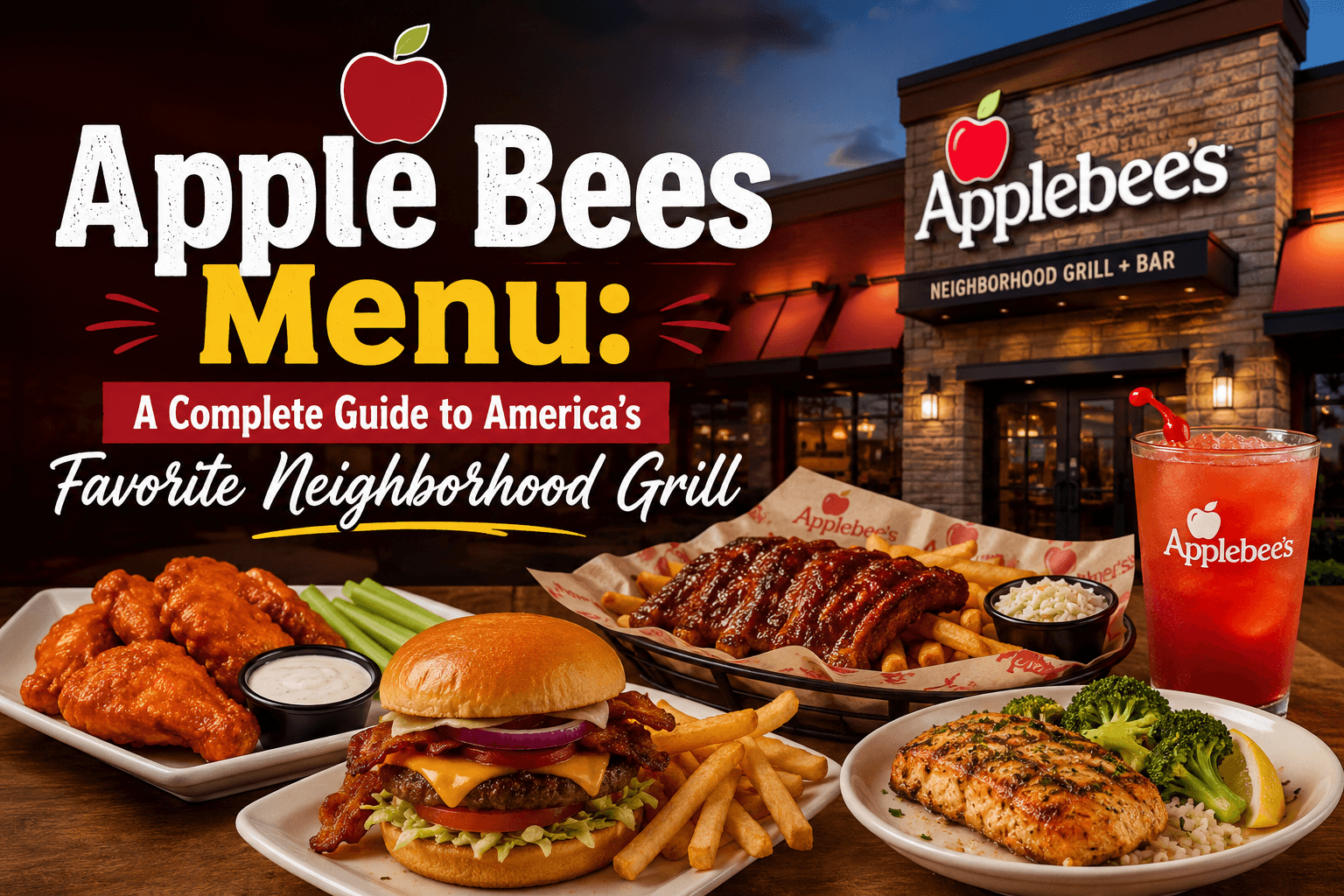
Few casual dining chains feel as familiar as Applebee’s, and searching for the apple bees menu is usually the first step before a family dinner, a night out with friends, or a quick stop for wings and a drink. Despite the common misspelling, most people typing this phrase are looking for the same thing: a clear picture of what Applebee’s actually serves, how much it costs, and what makes it worth the visit.
This guide walks through everything worth knowing about the apple bees menu, from its origins to what’s currently on offer, along with pricing, standout deals, and a few practical tips for anyone planning their next trip to the Neighborhood Grill.
How Applebee’s Became a Household Name
Applebee’s got its start in 1980 in Decatur, Georgia, founded by Bill and T.J. Palmer. The original concept had a much longer name, T.J. Applebee’s Rx for Edibles & Elixirs, and it eventually evolved into the more familiar Applebee’s Neighborhood Grill and Bar that people recognize today.
From the beginning, the idea was simple: offer approachable American comfort food in a relaxed, welcoming setting, at prices that felt reasonable for regular family visits rather than special occasions only. That formula worked. The brand expanded quickly through franchising, eventually growing into one of the largest casual dining chains in the country.
In 2007, Applebee’s merged with IHOP under Dine Brands Global, a move that combined two of America’s most recognizable comfort-food brands under one parent company. Today, the apple bees menu is served across more than 1,500 locations in the United States and additional markets internationally, making it one of the most widely recognized casual dining menus in the country.
What’s Actually on the Menu Today
The modern apple bees menu is organized into clear categories, including appetizers, burgers, handhelds, steaks and ribs, chicken and pasta, seafood, salads and bowls, sides, and desserts. That structure makes it easy to navigate whether you’re planning a full sit-down meal or just grabbing a quick bite at the bar.
Appetizers tend to set the tone for a typical Applebee’s visit, with boneless and bone-in wings, mozzarella sticks, and spinach and artichoke dip among the most popular starters. These items are often built for sharing, which fits naturally with the casual, group-friendly atmosphere the brand has cultivated since the beginning.
Burgers and handhelds make up a significant portion of the apple bees menu as well, with hand-pressed patties remaining a signature part of the brand’s identity. Steaks and ribs sit toward the heartier end of the menu, with the Bourbon Street Steak standing out as one of the most requested entrées. Riblets, a longtime Applebee’s specialty, continue to draw loyal fans who return specifically for that dish.
Chicken and pasta dishes round out the more traditional comfort-food side of the menu, while seafood options like grilled or blackened salmon give guests a lighter alternative. Salads and bowls have become increasingly prominent too, reflecting a broader shift toward more balanced options within casual dining menus generally.
Signature Items Worth Knowing About
Certain dishes have become so closely associated with Applebee’s that they’re practically shorthand for the brand itself. The Bourbon Street Steak, for instance, consistently ranks among the most ordered items on the apple bees menu, prized for its bold marinade and reliable quality across locations.
Riblets remain another defining dish, tracing back decades as one of the restaurant’s original signature offerings. For many longtime customers, riblets aren’t just a menu item, they’re part of what makes Applebee’s feel distinct from other casual dining competitors.
Newer additions have kept the menu from feeling stagnant. The Hot Honey Glazed Chicken Skillet represents the kind of seasonal innovation Applebee’s has leaned into recently, blending familiar comfort food with slightly bolder, trend-driven flavors. This mix of long-standing classics and fresh limited-time dishes is part of why the apple bees menu continues to attract both loyal regulars and newer customers curious about what’s changed.
Understanding Menu Types and Structure
One detail that often gets overlooked is that Applebee’s doesn’t operate with a single static list of dishes. The apple bees menu actually includes a few different formats working together. Static menu items stay the same every day and form the backbone of the overall offering, while cyclical menu items rotate on a set schedule throughout the year.
There’s also a du jour component, featuring daily specials that can vary by location and season. Separate beverage and dessert menus exist alongside the main food offerings, making it easier for guests to browse drinks and sweets without digging through the full list of entrées.
Understanding this structure helps explain why the apple bees menu can look slightly different depending on when you visit or which location you’re at. Limited-time offerings rotate in and out regularly, which keeps the overall lineup feeling current without requiring a complete overhaul each time.
Pricing and Value Deals
Value has always been part of Applebee’s core appeal, and the apple bees menu reflects that clearly through both individual pricing and bundled deals. The Classic Burger tends to sit at the lower end of the entrée range, often cited as one of the more affordable full meals available. On the other end, specialty dishes like the Bourbon Street Steak or larger combination platters cost more, reflecting their size and ingredients.
Appetizers like boneless wings or mozzarella sticks typically fall in a moderate price range, making them easy additions to a meal without dramatically increasing the total bill. Prices do shift somewhat by region and individual franchise, so the exact numbers on the apple bees menu can vary slightly depending on where you’re ordering.
The 2 for $25 deal remains one of the most recognized value promotions on the entire menu, allowing two guests to choose from a set list of entrées for a fixed combined price. This kind of bundled pricing has helped Applebee’s maintain a reputation for affordability, even as menu prices across the restaurant industry have generally climbed in recent years.
Drink specials add another layer of value, with the well-known Dollarita promotion standing out as one of the most talked-about deals tied to the brand. These kinds of recurring specials give regular customers a reason to keep coming back beyond just the food itself.
Nutrition and Dietary Considerations
Nutrition varies significantly across the apple bees menu, given how broad the selection is. Lighter options like grilled salmon or salads with dressing served on the side tend to sit in a more moderate calorie range, often between four hundred and six hundred calories depending on preparation and portion size.
Heartier dishes, particularly loaded skillets, ribs, and larger combination platters, can run considerably higher, sometimes well beyond a thousand calories once sides and sauces are factored in. For guests managing specific dietary needs, Applebee’s does provide allergen and nutrition information upon request, which is worth checking before ordering anything unfamiliar.
It’s also worth noting that some dishes on the apple bees menu may contain alcohol as an ingredient, particularly in certain sauces or specialty dishes, so it’s reasonable to ask staff directly if that’s a concern.
Hours, Ordering, and Convenience Options
Most Applebee’s locations open around 11:00 AM and close near 10:00 PM, though exact hours can vary by location and day of the week. Holiday hours shift as well, so checking ahead before a visit on a major holiday is generally a good idea.
Convenience has become a bigger focus for the brand in recent years, and the apple bees menu is now accessible through several ordering formats beyond traditional dine-in service. Mobile ordering, contactless dining, to-go pickup, and even drive-thru service at select locations have all made it easier to enjoy the menu without necessarily sitting down at a table.
This flexibility reflects a broader trend across casual dining, where convenience increasingly matters as much as the food itself. For families or groups short on time, being able to order ahead through the app and simply pick up a completed meal has become a meaningful part of the overall experience.
Tips for Ordering Smarter
A few small habits can make navigating the apple bees menu easier, especially for first-time visitors. Starting with a well-known favorite, like boneless wings or the Bourbon Street Steak, is a reliable way to get a sense of the overall quality and flavor profile before branching out into newer or more seasonal dishes.
Checking for the 2 for $25 deal before ordering individually is usually smart, particularly for guests dining with a partner or friend, since it frequently offers better value than ordering full-priced entrées separately. Keeping an eye on rotating limited-time items is worth doing too, since these tend to disappear once their run ends.
For anyone managing dietary needs, asking staff directly about ingredients or requesting nutrition information ahead of time tends to be more reliable than guessing based on the printed description alone.
Final Thoughts
The apple bees menu has held onto its identity as an approachable, family-friendly comfort food destination for more than four decades, and that consistency is a big part of why it remains so popular. From long-standing favorites like riblets and the Bourbon Street Steak to newer seasonal additions and reliable value deals like 2 for $25, there’s enough variety here to satisfy a wide range of tastes and budgets.
Whether you’re a longtime regular who always orders the same handheld or someone exploring the menu for the first time, understanding the structure, pricing, and standout dishes ahead of time makes for a smoother, more enjoyable visit. Given how deeply Applebee’s has woven itself into casual American dining culture, it’s easy to see why so many people keep coming back to the same reliable neighborhood grill experience.
Read More Trending Blogs on Insider NYT.
