

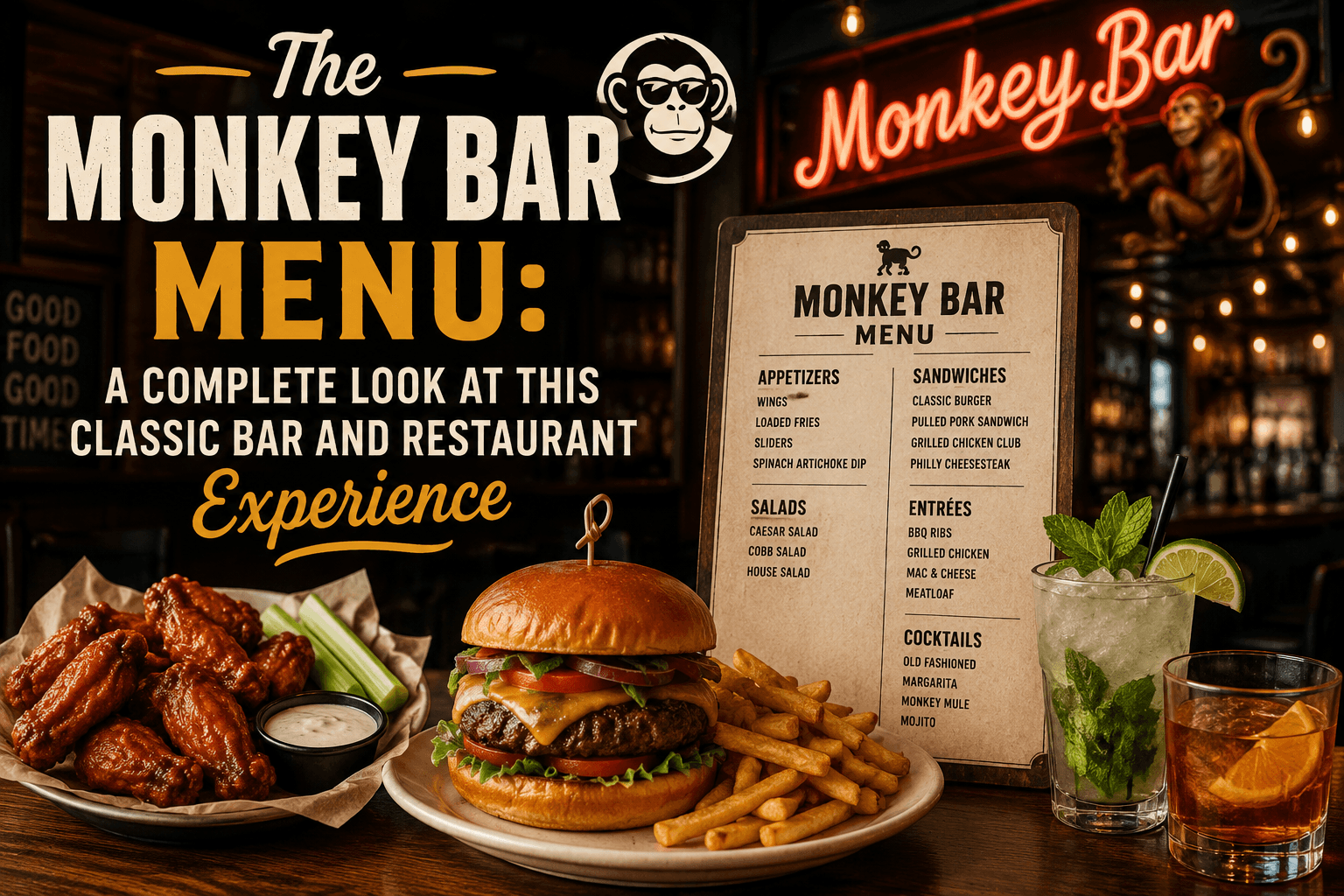
Walk into any bar or restaurant carrying the name “Monkey Bar,” and you’ll likely notice a similar theme running through the experience: playful branding, a nostalgic atmosphere, and a monkey bar menu built around comfort food, hearty appetizers, and a solid cocktail list. While there isn’t just one single “Monkey Bar” chain spread across the country, the name has become associated with a particular kind of dining experience, one that blends casual fun with a touch of classic American charm.
This article takes a closer look at what typically makes up a monkey bar menu, where the concept comes from, and what to expect if you’re planning to visit one of these spots for a meal, a few drinks, or both.
What the Monkey Bar Concept Usually Represents
The name “Monkey Bar” shows up in different cities under different ownership, but the concept tends to share a few common threads. Most locations lean into a lively, easygoing atmosphere, often with playful monkey-themed décor, string lights, and a laid-back neighborhood-bar feel rather than anything overly formal.
That relaxed personality carries directly into the food. A typical monkey bar menu leans toward approachable, crowd-pleasing dishes rather than complicated or overly refined plates. Think burgers, wings, sandwiches, and shareable appetizers designed for groups of friends settling in for a few hours rather than a quick, formal dinner.
Some locations take the name more literally with monkey-related branding and merchandise, while others simply use it as a catchy, memorable identity for a casual American bar and grill. Either way, the goal is usually the same: create a fun, welcoming space where people feel comfortable staying a while.
A Look at the History Behind the Name
Interestingly, one of the most well-known establishments carrying this name is a historic New York City restaurant that first opened in the 1930s, known for its old-school glamour, red leather booths, and classic American dishes. That original spot helped cement “Monkey Bar” as a recognizable name in the restaurant world, even though many later establishments using the name have little direct connection to it beyond borrowing the branding.
Since then, numerous independent bars and restaurants across different states and even other countries have adopted similar names, each building its own version of a monkey bar menu suited to local tastes. Some lean toward upscale American dining reminiscent of that original New York establishment, while others are far more casual, functioning as neighborhood hangouts known for cold drinks and simple, satisfying food.
This variety is part of what makes the concept interesting. There’s no single corporate standard dictating what belongs on a monkey bar menu, which means each location has the freedom to shape its offerings around its own local audience and personality.
It also means that two people describing a monkey bar menu in different cities could be picturing entirely different experiences, one an elegant dinner spot with white tablecloths, the other a laid-back tavern with peanut shells on the floor. That flexibility is part of the charm, since the name has never been locked into one rigid formula the way a national franchise menu often is.
Typical Categories Found on a Monkey Bar Menu
Even without a single unifying company behind every location, certain menu categories show up again and again. Understanding these common categories makes it easier to know what to expect no matter which version of a monkey bar menu you happen to be looking at.
Appetizers usually lead the way, with items designed for sharing. Wings, sliders, loaded fries, and dips are common choices, all built around the idea of casual snacking while drinks are flowing. These starters tend to be filling enough to hold their own as a light meal if that’s all a guest is looking for.
Burgers and sandwiches typically make up a significant portion of the main offerings. A solid monkey bar menu almost always includes a few burger variations, along with classic sandwiches like club sandwiches or pulled pork, since these dishes are easy to prepare consistently and pair naturally with a casual bar setting.
Entrées rounding out a fuller meal often include items like ribs, grilled chicken, or comfort-food classics such as mac and cheese or meatloaf, especially at locations leaning into that nostalgic American dining feel. These larger plates give guests something more substantial if they’re settling in for dinner rather than just grabbing a quick bite.
Salads and lighter options usually appear as well, offering a break from heavier bar food for guests who want something a bit more balanced. While salads aren’t typically the star of a monkey bar menu, most locations include at least a few solid choices for lighter appetites.
The Role of Drinks Alongside the Food Menu
Given the bar-first identity behind the name, drinks play just as important a role as the food itself. A well-rounded monkey bar menu is almost always paired with an equally thoughtful drink list, covering beer, wine, and a rotating selection of cocktails.
Classic cocktails tend to dominate, especially at locations leaning into a retro or nostalgic theme. Old fashioneds, martinis, and other traditional bar staples often appear alongside a few house specialty drinks unique to that particular location.
Beer selections usually range from familiar domestic options to a handful of local craft choices, giving guests flexibility depending on their preference. Wine lists tend to be shorter and more approachable, focused on easy-drinking options rather than an extensive, formal selection.
Because food and drinks are so closely tied together at these kinds of establishments, many locations design their monkey bar menu with pairing in mind, suggesting certain appetizers or entrées alongside specific cocktails or beers to enhance the overall experience.
Pricing Expectations Across Different Locations
Since there’s no single company setting prices across every location using this name, costs can vary quite a bit depending on where you are and what kind of establishment you’re visiting. A casual neighborhood bar version of a monkey bar menu will typically feel budget-friendly, with appetizers, sandwiches, and burgers priced similarly to other laid-back, local hangouts.
More upscale interpretations, particularly those inspired by that original historic New York restaurant, tend to price their offerings closer to a full-service American restaurant, reflecting more elevated ingredients, presentation, and service. In those settings, a monkey bar menu might include higher-end entrées and a more curated cocktail list to match the overall dining experience.
Regardless of the price point, most locations aim to strike a balance between value and quality, since repeat business from regulars is often central to how these kinds of bars operate. A menu that feels overpriced for a casual setting tends to drive away the very customers these establishments depend on most.
What Makes a Monkey Bar Menu Stand Out
Given how many independent establishments share this name, standing out requires more than just a catchy title. The most memorable versions of a monkey bar menu tend to combine consistent quality with a bit of personality, whether that’s a signature sauce, a standout burger, or a specialty cocktail found nowhere else.
Atmosphere plays a major role here as well. Since the name itself carries a playful, approachable tone, successful locations tend to match that energy through friendly service, comfortable seating, and a general sense that guests are welcome to relax and stay a while rather than rush through a meal.
Consistency also matters. Guests returning to a favorite spot expect the dishes they loved previously to taste the same way each time, and locations that maintain that reliability tend to build stronger, more loyal followings over time.
Little details often make the biggest difference too. Things like a well-timed kitchen during a busy game night, a bartender who remembers a regular’s usual order, or a seasonal twist on a familiar appetizer can turn an ordinary visit into one guests talk about and return for. These small touches rarely show up in a written description, but they’re often what separates a forgettable stop from a genuine neighborhood favorite.
Tips for Ordering from a Monkey Bar Menu
If you’re visiting one of these establishments for the first time, a few simple strategies can help you get the most out of the experience. Start by asking about the location’s signature dish, since most bars carrying this name tend to have one standout item that regulars consistently recommend.
Pairing food and drinks thoughtfully can also elevate the visit. A heavier appetizer might pair well with a lighter beer, while a rich entrée could be balanced nicely with a crisp cocktail. Staff are usually happy to offer pairing suggestions if you’re unsure where to start.
If you’re visiting with a group, leaning into shareable appetizers from the monkey bar menu is often the best approach, allowing everyone to sample a variety of dishes rather than committing to just one option. This also fits naturally with the casual, social atmosphere most of these bars are built around.
Finally, don’t be afraid to ask about daily specials or rotating seasonal items. Many locations refresh part of their offerings periodically, meaning the version of the menu you see on one visit might look slightly different the next time you return.
Final Thoughts
The concept behind a monkey bar menu isn’t tied to one single corporate identity, but rather to a shared personality found across many independently run bars and restaurants. Whether inspired by a historic New York institution or built from scratch as a neighborhood favorite, these establishments tend to share a common thread of casual comfort food, solid drinks, and a welcoming, easygoing atmosphere.
Understanding what typically shows up on a monkey bar menu, along with the history and variety behind the name, makes it easier to know what to expect before you visit. Whether you’re after a quick burger and a beer or a fuller dinner paired with a classic cocktail, this kind of menu is generally built around one simple goal: giving guests a relaxed, satisfying experience worth coming back for. In the end, it’s this combination of familiar comfort and local personality that keeps people walking through the door long after the first visit.
Read More Trending Blogs on Insider NYT.
